

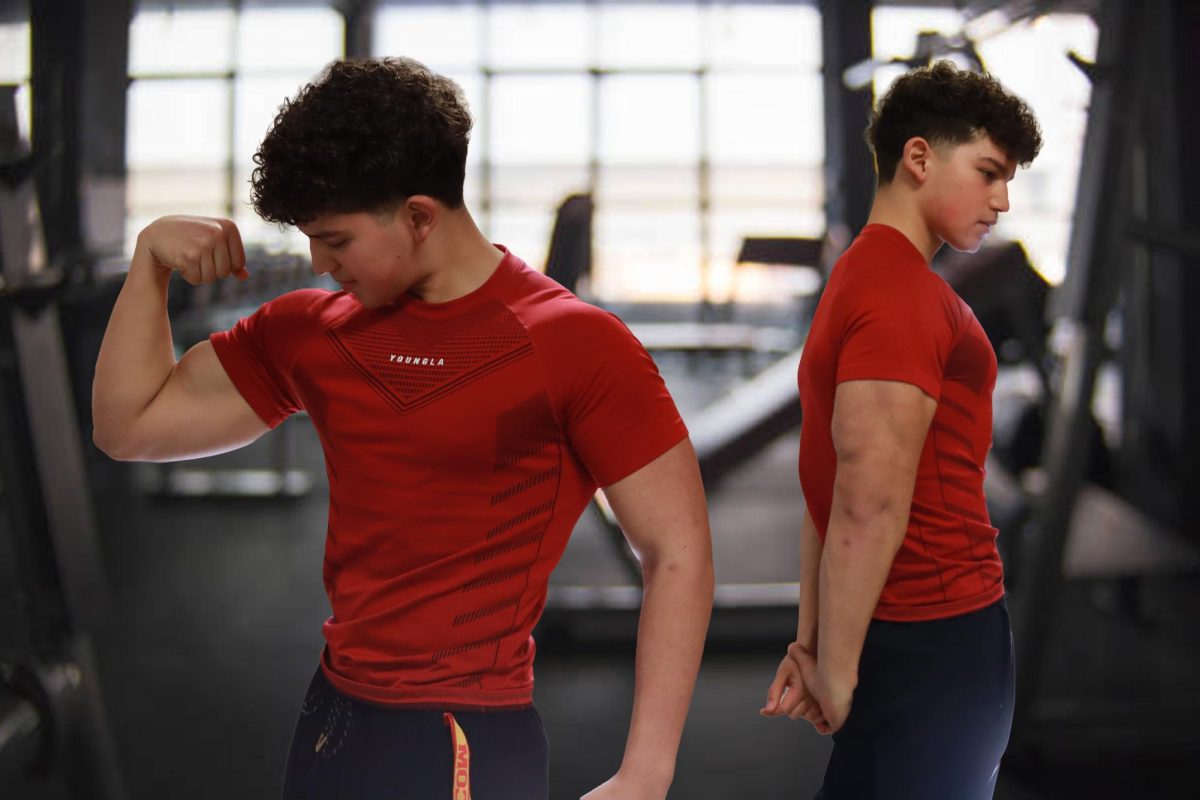
Without a doubt, gym culture has evolved throughout the years, recently reaching a tipping point. Before, in the 1980s, the majority of people only did exercises such as Pilates or yoga, or simply were athletes, it did not cross the mind of the average American citizen to go to the gym six days a week and eat enough protein to grow muscle.
Nowadays, the fitness world has a stark duality. Most people go because it’s trendy, not because they actually want to go to the gym, because most people go to the gym now and do it more because it’s fashionable, or maybe because because they are truly interested in their health, they want to feel strong and be satisfied with themselves, while others simply go to the gym to flex a little bit the gains that so much effort and sacrifice have given them. These two points of view do not mean that they are wrong or right at all. Each person has different reasons to do different activities.
But many of these reasons are rooted in something much deeper than just looking good or feeling good about themselves. And that goes a little into the topic of the perception we have of ourselves and the perception of how, socially speaking, the gym marks an abysmal difference in what we know today as our social relationships.
One of the most important points on it is body dysmorphia. Body dysmorphia is defined as a condition where a person worries a lot about their appearance, feeling afraid of their bodies and comparing it to the social environment they live in. The term evolved from being described as “dysmorphophobia” by the Italian psychiatrist Enrico Morselli in 1891. The term is not new, and now social media and up-to-date “digital stereotypes” have intensified its presence in new generations.
Considering this condition, people of all ages might have different reasons for overcoming this invisible yet impactful condition. From athletes and gym enthusiasts to 40-year-olds trying to get in shape, the gym brought together people with diverse motivations, some so common that they’ve become almost automatic responses when you ask someone, “Hey, why do you go to the gym?”
Physical change is something that we all have experienced at least one time in our lives. You see yourself in the mirror and you don’t like what you see. People, as young as 15 or 16 years old, are looking for a change in their physique and health in a country that has 19.7% of their kids from ages two to 19 overweight. Accomplishing your goal, then, makes you look better and more dedicated to what you do.
After you built the habit of working out, here comes an interesting aspect: Keep going to get bigger or to improve your health conditions even more.
Currently there is a term given for people apparently obsessed with work out, called Gym Rats. Defined as a slang term, it refers to people who spend long hours working out, recording their sessions, and building their daily day routine to track their process. To most people, it doesn’t bother them that these “gym rats” are recording their sessions and wearing sleeveless T-shirts to show off their gains as long as they keep the videos and don’t feed their narcissism with their body.
The gym has become more than just a place to exercise: it’s now a reflection of how society views discipline, appearance, and self-esteem. Fitness culture reveals how deeply our bodies are intertwined with our identity, and being able to navigate this balance is crucial for building healthier relationships with both exercise and ourselves.